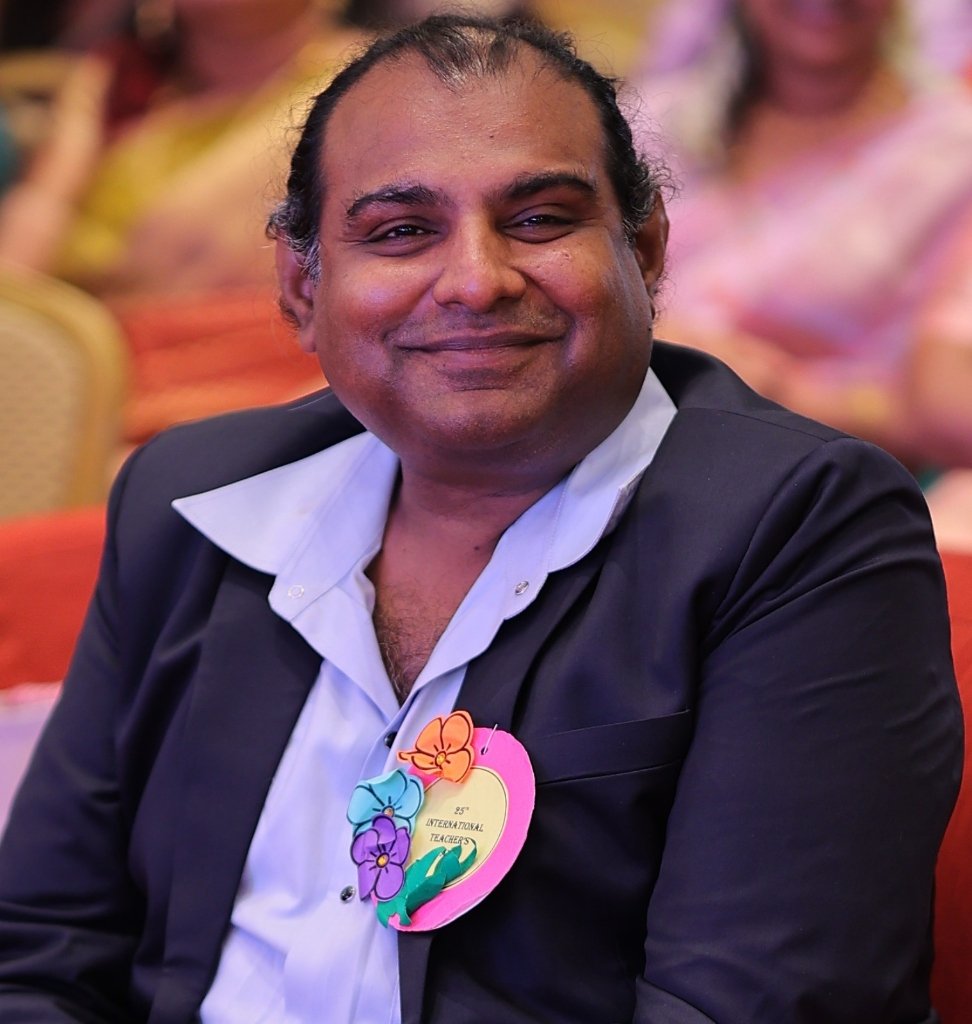
Intelligent vs. Future-Ready Kids: What Should the Next Generation Learn? | Dr. J. Arawindhan on the Gobinath Podcast
Explore the critical difference between intelligent and future-ready children, featuring key parenting and educational insights from Dr. J. Arawindhan on the Gobinath Podcast.
Beyond Examination Marks: Are We Preparing Children for Exams or for Life?
In today's rapidly changing world, intelligence alone may not be enough to prepare children for the future. Children need creativity, confidence, emotional intelligence, leadership, adaptability, and the ability to solve real-world problems.
In the Gobinath Podcast, Dr. J. Arawindhan, Founder of Achariya Educational Institution, shares his perspectives on how parenting, teaching methods, and the learning environment must evolve to prepare the next generation. The central question is simple: Are we raising children to score marks, or are we helping them become future-ready individuals?
Intelligent vs. Future-Ready Children: Understanding the Essential Distinction
An intelligent child may perform well in examinations, understand concepts quickly, and remember information. However, a future-ready child must also know how to apply knowledge, think independently, handle failure, and discover new possibilities.
The future requires children who can adapt to change, collaborate with others, use technology responsibly, and create solutions instead of simply following existing methods. Education should therefore move beyond academic achievement and focus on developing the complete potential of every child.
Every Child Is Capable: Nurturing Inherent Potential Beyond Marks
Every child has unique strengths, interests, and abilities. Some children may excel in mathematics, while others demonstrate exceptional skills in painting, sports, communication, music, leadership, or creative thinking. However, when academic marks become the only measure of success, children may miss opportunities to explore their natural talents.
Dr. J. Arawindhan's discussion highlights the importance of identifying each child's individual abilities and creating an environment where those abilities can grow.
Parents and educators should ask: • What does this child enjoy doing? • Which activities make the child curious? • Where does the child demonstrate confidence? • How can this ability be developed through practice?
Recognising a child's strengths early can help build confidence and encourage lifelong learning.
Practical Pathways for Children to Discover Their Natural Talents
Children discover their abilities through exploration, experience, and encouragement—not simply through instructions. Schools should provide opportunities for children to participate in sports, art, music, experiments, public speaking, problem-solving activities, and teamwork.
Practical learning allows children to understand their strengths through real experiences. Case studies, projects, research activities, and hands-on challenges can help them connect classroom knowledge with everyday life. Parents should also encourage children to try different activities without immediately judging their performance. Making mistakes is a natural part of learning. The goal is not to decide a child's future for them, but to help them discover their own possibilities.
Multiple Intelligences: Embracing Diverse Learning Styles and Expressions
The theory of multiple intelligences, developed by psychologist Howard Gardner, describes different ways people may demonstrate their abilities. These include linguistic, logical-mathematical, spatial, musical, bodily-kinaesthetic, interpersonal, intrapersonal, and naturalistic intelligences. This perspective encourages educators to recognise that children do not all learn or express their abilities in the same way.
A child who struggles with written examinations may demonstrate strong practical, creative, interpersonal, or athletic abilities. Schools can support different strengths by providing varied learning experiences rather than relying entirely on one method of assessment. The objective is to help children identify their strengths, develop other skills, and contribute meaningfully to society.
The Four Pillars of Holistic Child Development: Arivu, Boldness, Unique Ability, and Leadership
Dr. J. Arawindhan's discussion emphasises developing children beyond academic performance. A future-ready learning environment should nurture four interconnected pillars:
• Arivu (Knowledge and Learning): Developing deep understanding, curiosity, critical thinking, and the ability to learn continuously. • Boldness: Building confidence, encouraging questions, expressing opinions without fear, and facing challenges with resilience. • Unique Personal Ability: Identifying individual talents and developing them through practice and experience. • Leadership: Learning responsibility, decision-making, communication, collaboration, and teamwork.
These dimensions help children understand themselves, interact with others, and prepare for the challenges of adulthood.
Balancing IQ, EQ, Self-Quotient, and Social Quotient for Life Mastery
Academic intelligence is only one part of personal development. Children also need emotional awareness, self-understanding, and social skills:
• IQ (Intelligence Quotient): Relates to cognitive abilities such as reasoning, problem-solving, and understanding concepts. • EQ (Emotional Quotient): Refers to recognising, understanding, and managing emotions constructively. • Self-Quotient: In Dr. J. Arawindhan's discussion, this idea highlights self-awareness, personal responsibility, and the ability to make thoughtful decisions amid uncertainty. • Social Quotient: Relates to interacting effectively with others, building relationships, and working collaboratively.
Developing these abilities can help children manage challenges, communicate clearly, make responsible decisions, and build healthy relationships. Education should prepare children not only to find answers but also to ask meaningful questions and make sound decisions when answers are uncertain.
Supportive Parenting: Nurturing Confidence and Eliminating the Fear of Failure
Parenting has a significant influence on a child's confidence, motivation, and willingness to explore new experiences. Constant comparison, excessive pressure for marks, negative comments, and fear of failure can discourage children from trying unfamiliar activities.
Parents should avoid statements that make children feel incapable or worthless. Instead, they can acknowledge effort, encourage improvement, and help children learn from mistakes.
Three practical approaches can make a difference: • Encourage independent thinking: Allow children to express opinions and suggest solutions. • Give age-appropriate responsibilities: Simple household tasks help children develop accountability and confidence. • Show love and affection: Children need emotional security, patience, and supportive communication.
Parents should also listen to children rather than relying only on lectures. Meaningful conversations can help children express their concerns and develop their own judgement.
From Teaching to Active Learning: The Power of Peer Collaboration and Practical Pedagogy
Traditional teaching methods often place the teacher at the centre of the classroom. Future-ready education should give children more opportunities to participate, explore, question, and learn actively. Dr. J. Arawindhan discusses the importance of student-to-student learning, in which children explain concepts, exchange ideas, solve problems together, and learn from one another.
At Achariya Educational Institution, the emphasis on power teaching and peer learning reflects the value of making students active participants in the learning process.
A strong learning environment should encourage: • Research and case-study activities. • Project-based and experiential learning. • Student presentations and discussions. • Teamwork and collaborative problem-solving. • Reading, writing, and independent thinking.
The role of an educator is not merely to deliver information. It is to help students develop the ability to understand, question, apply, and create knowledge.
Preparing Children for AI and Super Intelligence
Artificial intelligence is changing how people work, communicate, learn, and solve problems. Children will increasingly interact with AI tools throughout their education and careers. However, using technology should not replace independent thinking. Children need to understand how to ask meaningful questions, evaluate information, recognise errors, and make decisions using their own judgement.
Future-ready children should develop creativity, coding and digital literacy, communication, empathy, critical thinking, and team-building skills. They should learn to use AI as a tool for improving their capabilities rather than depending on it for every answer.
Reading, handwriting, problem-solving, discussion, and hands-on activities remain valuable ways to practise thinking and communication. Technology should complement these activities, not eliminate them. The important question is not whether children will use AI, but whether they will have the knowledge and judgement to use it effectively.
The Importance of Creativity and Early Learning
Childhood provides important opportunities to explore, imagine, experiment, and develop new skills. Parents and educators can encourage creativity by providing open-ended activities, storytelling, drawing, building projects, outdoor play, music, and opportunities to solve problems independently.
Children should have the freedom to make choices, test ideas, and learn from the results. Rather than expecting every child to follow the same path, schools can create flexible learning environments that recognise different interests and abilities. Creativity develops through experience, practice, encouragement, and opportunities to explore. It should be nurtured throughout childhood and beyond.
Building a Holistic Collaborative Ecosystem for Future-Ready Individuals
Preparing the next generation requires cooperation between parents, teachers, schools, and the wider community. A supportive ecosystem should combine academic knowledge with practical experience, emotional development, creativity, technology, and social interaction.
At home, parents can encourage reading, independent thinking, age-appropriate responsibilities, and meaningful conversations. At school, educators can introduce projects, collaborative learning, sports, creative activities, and real-world problem-solving.
Children should also learn to accept failure as part of growth. When they encounter difficulties, supportive adults can help them understand what went wrong, identify possible solutions, and try again. This approach helps children build resilience, adaptability, and confidence—qualities that are valuable in an uncertain future.
Build Future-Ready Children, Not Just Intelligent Students
The future of education depends on how well we prepare children to think, create, communicate, adapt, and contribute to society. As discussed by Dr. J. Arawindhan on the Gobinath Podcast, parents and educators need to look beyond marks and recognise the wider potential of every child.
A future-ready child is not simply someone who knows more information. It is someone who can apply knowledge, discover personal strengths, work with others, handle uncertainty, and use technology responsibly. The real purpose of education is to help every child discover their abilities and develop the confidence to turn possibilities into achievements. Every child has potential. The responsibility of parents and educators is to create the right environment for that potential to grow.
Frequently Asked Questions (FAQs)
What is the difference between an intelligent child and a future-ready child?+
An intelligent child may demonstrate strong cognitive abilities and academic recall, while a future-ready child also develops creativity, communication, emotional awareness, adaptability, problem-solving, and practical life skills.
How can parents identify their child's unique talents?+
Parents can observe children's natural interests, encourage them to explore varied activities, provide opportunities for practice, and recognise their strengths without comparing them with others.
How can schools prepare children for the future?+
Schools can combine academic learning with practical projects, research, peer learning, creativity, sports, leadership activities, and responsible technology use.
How should children prepare for an AI-driven future?+
Children should develop critical thinking, creativity, digital literacy, communication, empathy, and the ability to evaluate AI-generated information rather than depending entirely on automated answers.
Who is Dr. J. Arawindhan?+
Dr. J. Arawindhan is the Founder, Chief Mentor and Managing Director of Achariya Educational Institution. In the Gobinath Podcast discussion, he shares perspectives on child development, parenting, practical education, individual abilities, and preparing children for the future.